


Lotion pumps are one of the most widely used dispensing formats in personal care and beauty packaging. When everything is working as it should, a pump delivers the right amount of product every single time. But have you ever stopped to wonder what is actually going on inside that small plastic mechanism when you press it down?
While there are hundreds of pump designs on the market, the basic principle remains the same across them all. But understanding the components inside a lotion pump will aid any decision-maker in their final design, including matching a dispenser to your brand and products. Here is a breakdown of every part and what it does.
The Components of a Lotion Pump
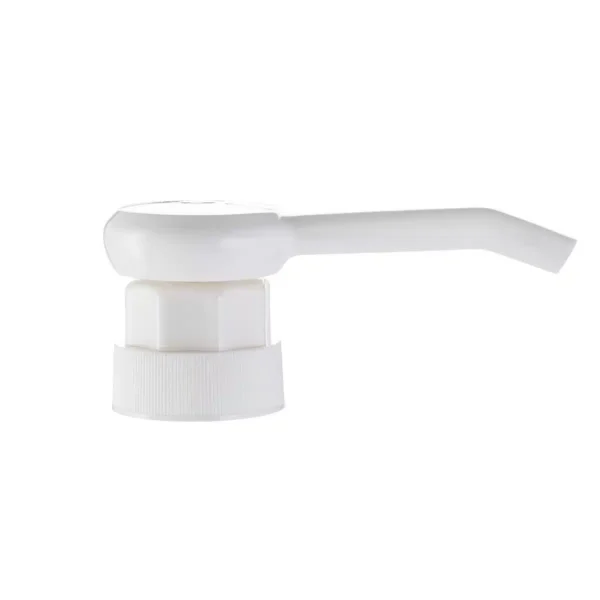
Actuator
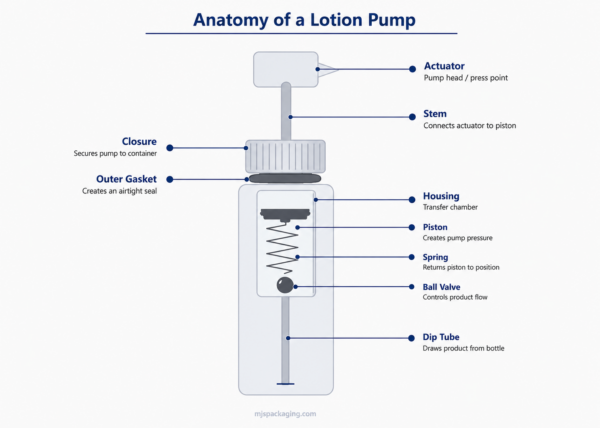
The actuator is the pump head, the part the consumer presses to dispense product. It is typically made from PP plastic and is available in a wide range of shapes, sizes and orifices. The actuator is also the most visible part of the pump, so its design plays a significant role in the overall look and feel of your packaging. Many actuators include an up-lock or down-lock feature that prevents accidental dispensing and leakage during shipping and retail display.
Closure
The closure is the collar that screws the entire pump assembly onto the neck of the container. It is identified by its neck finish size, and must match your bottle or jar exactly. Most closures are PP plastic with either a ribbed or smooth exterior. For brands seeking a premium presentation, a shiny metal finish can be added to the closure to give the bottle pump a high-end, elegant look.
Outer Gasket
The outer gasket sits inside the closure and forms a seal against the container’s land area. This barrier is what prevents the product from leaking around the neck. Gaskets can be made from a range of materials, depending on the pump manufacturer’s design, with rubber and LDPE among the most common options.
Housing
The housing is the main body of the pump. It holds all internal components in place and acts as the transfer chamber that moves product from the dip tube up to the actuator. Housing size varies depending on the pump’s output volume.
Piston, Spring and Ball
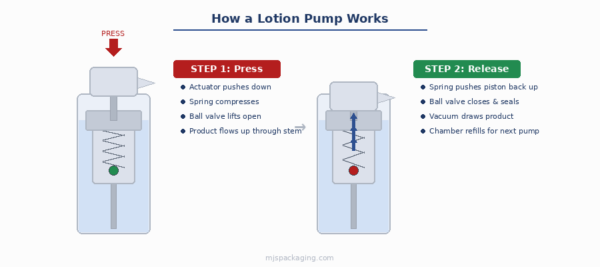
These are the internal working components housed inside the pump body. Together, they create the pressure mechanism that draws product up from the bottle and delivers it through the actuator. When you press down, the piston compresses the spring and the ball valve lifts to allow the product to travel upward. When you release, the spring returns the piston to position, the ball drops back into its seat and the chamber refills. The exact configuration of these parts varies by pump design. Some dispensers include a metal-free product pathway, meaning the internal spring is isolated so the product never contacts metal—an important feature for formulas with compatibility concerns.
Dip Tube
The dip tube is the long PP plastic tube that extends from the base of the housing down to the bottom of the bottle or jar. Its job is to draw product up from the container into the pump chamber. The dip tube length must match the container’s height. A properly cut dip tube maximizes product yield and prevents clogging. Cutting it too short leaves usable product at the bottom of the container and cutting it too long causes the tube to kink or bend.
Finding the Right Pump for Your Product
Every component in a dispenser lotion pump plays a specific role and the right combination depends on your formula, your container and your brand requirements. Viscosity, output volume, neck finish, material compatibility and retail presentation all factor into the decision, and decision-makers should always check fit and function before committing to a pump and bottle combination.
At MJS Packaging, we carry a wide range of lotion pumps and can help you match the right pump to your product and packaging. Whether you are starting a new formulation or updating an existing line, our team is ready to help.
Contact us today or start a project to find the right bottle pump for your needs.


Leave a Reply