


When you think about packaging labels, it is easy to focus on the basics: product name, ingredients and barcode. But for brands operating across retail, pharmaceutical, food and beverage, or household chemicals, labels are doing far more than identifying what is inside the bottle or box. They are one of the most practical tools available for protecting your product, your brand and your customers.
Counterfeiting and product tampering are not niche concerns. According to the OECD/EUIPO Mapping Global Trade in Fakes 2025 report, global trade in counterfeit goods reached $467 billion USD (about 2.3 percent of global imports), based on 2021 data. In regulated industries, a single tampering incident can trigger product recalls, regulatory action and lasting damage to the consumer trust that took years to build.
Understanding the label technologies available is a straightforward and high-impact place to start. Here is a look at three key label components and how each one contributes to building a more secure product.
What Are Barcodes?
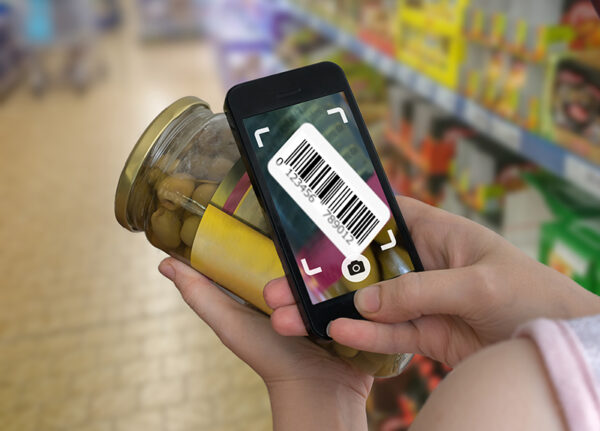
Barcodes are machine-readable representations of data encoded as a series of lines, spaces or geometric patterns. First used commercially in the 1970s, they remain one of the most widely deployed identification systems in the world and are a foundational element of retail supply chain management. Barcodes are printed on product labels and read by either laser or image scanners to extract assigned data about that item. They enable faster item tracking and inventory management and can assist with safety recalls.
Standard one-dimensional (1D) barcodes encode data in the width and spacing of vertical lines, storing a minimal amount of data. Two-dimensional (2D) formats like QR codes and Data Matrix codes store significantly more information, including URLs, serial numbers, batch codes and expiration dates, making them useful for both identification and consumer-facing authentication.
From a security standpoint, serialized barcodes are especially valuable. By assigning a unique code to each individual unit, brands can trace a product from manufacturing to point of sale, helping detect diversion, unauthorized distribution and counterfeit product introductions in the supply chain.
What Are UPCs?
UPC stands for Universal Product Code. It is a standardized, one-dimensional barcode format required by most major retail environments, including grocery stores, pharmacies, mass market retailers and online marketplaces. If your product is sold at retail, a GS1-registered UPC is typically non-negotiable.
A standard UPC-A barcode consists of 12 digits: a GS1-issued company prefix, a product reference number assigned by the brand and a check digit. Because each UPC is globally unique to a specific brand and product, misuse can be flagged through retailer data checks and supply chain audits. However, UPCs alone are not a tamper-proof anti-counterfeit measure.
Brands should ensure their UPCs are registered with GS1, printed with sufficient contrast for reliable scanning and applied consistently across all units in a given SKU. MJS Packaging can advise on label placement, print specifications and compatibility with your packaging format.
What Are RFID Labels?
RFID stands for Radio Frequency Identification. RFID labels use radio waves to communicate data wirelessly between the label and a reader, without requiring a direct line-of-sight scan. This makes RFID a more flexible and, in many applications, more powerful identification tool than optical barcodes. You can learn more about RFID labels in our webinar, “A Guide to Labels: Perfecting Your Product’s Billboard.”
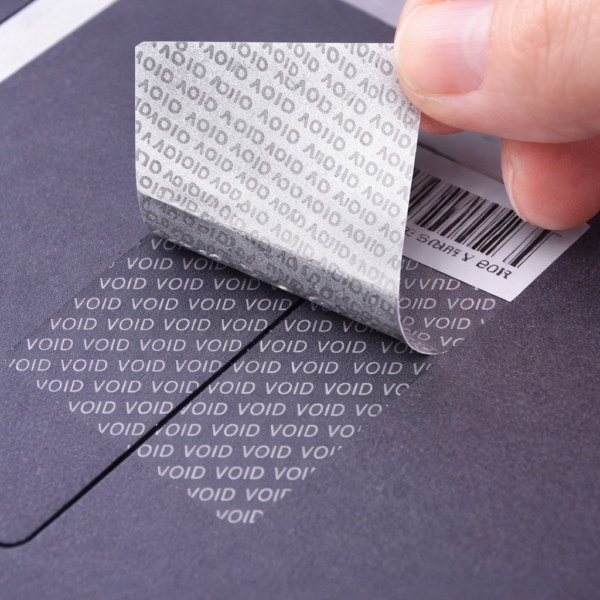
An RFID label contains a microchip and an antenna. When it comes within range of an RFID reader, the reader retrieves the stored data in milliseconds without physical contact. Passive RFID, the most common format in retail supply chains, is powered by the reader’s signal. Active RFID uses a built-in battery for longer ranges and is used in high-value asset-tracking applications. For brand security, RFID offers item-level serialization via a unique Electronic Product Code (EPC) on every unit, and invisible authentication that enables item-level identification and real-time supply chain visibility. Major retailers, such as Walmart and Target, have expanded RFID mandates across supplier categories, making compliance increasingly important for brands selling through large retail channels. RFID can also store more information than a traditional barcode and encrypt data. Tamper-evident labels provide a visible indication that a product has been accessed or altered after leaving the manufacturer. Unlike standard labels, they cannot be removed and reapplied without leaving clear evidence of interference. In many industries, tamper-evident packaging is a regulatory requirement. The FDA mandates tamper-evident packaging for over-the-counter drug products (with certain exceptions), and similar requirements apply to certain food, cosmetic and dietary supplement categories. For products that fall outside mandatory requirements, tamper-evident labeling is a strong signal of brand integrity that consumers actively look for. Common tamper-evident formats include: The right choice depends on your substrate, supply chain conditions and regulatory requirements. No single label technology addresses every security need. The most effective approaches combine identification and security layers: a UPC for retail compliance, an RFID label for supply chain traceability and a tamper-evident seal for consumer-facing protection. Together, they create a system that is significantly harder to defeat than any individual element. If you are evaluating barcode compliance, exploring RFID requirements for a new retail channel, or looking for the right tamper-evident solution for your product, our team of packaging specialists is here to help. At MJS Packaging, we offer a wide range of labeling solutions to meet regulatory requirements, retail compliance standards and the practical needs of your supply chain. Start a project with us today and take the next step toward packaging that protects your product and your brand.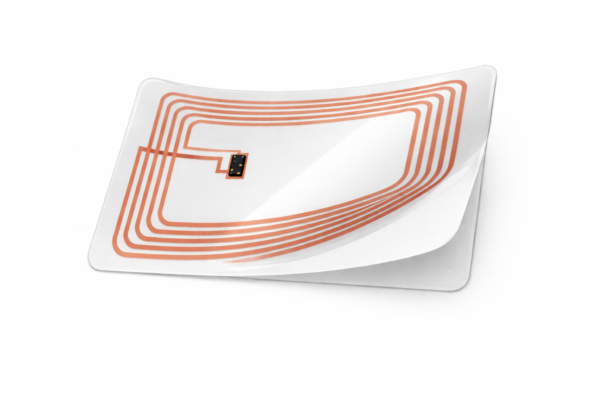
What Are Tamper-Evident Security Labels?
Building a Layered Label Strategy
Work with MJS Packaging on Your Next Label Project

Leave a Reply