


Understanding California SB 343 and What It Means for Your Business
If your company sells, distributes or imports plastic product packaging in California, there’s a critical labeling change you need to know about. California Senate Bill 343 (SB 343) is reshaping how the familiar chasing arrows symbol can be used on packaging and the compliance deadline is approaching fast.
What is the Chasing Arrows Symbol?
Chasing arrows is the familiar-looking symbol of a triangle comprised of arrows that can be seen on many forms of plastic packaging. For decades, consumers have used the chasing arrows symbol to reference the packaging material type and infer recycling guidance. However, this symbol has a history that many don’t realize.
This symbol originated as a Resin Identification Code (RIC) and wasn’t meant to guarantee that packaging could be recycled. According to ASTM International, it was intended to be a guide to resin type. The primary purpose of the RIC has always been to aid in sorting and identifying plastic resins for recycling facilities, not to communicate recyclability to consumers.
Recognizing this widespread confusion, ASTM adopted a major revision to its standard in 2013. As explained by the American National Standards Institute (ANSI), the newer ASTM standard adopted triangles with a solid, bold line rather than chasing arrows to avoid confusion with implied recyclability.
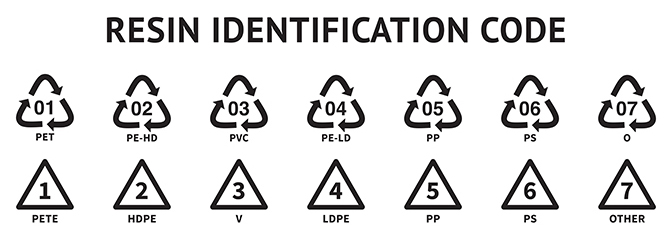
RIC Chasing Arrows Symbol vs. Bold Triangle Symbol
What is California SB 343?
According to CalRecycle, Senate Bill 343 “prohibits use of the chasing arrows or any other indicator of recyclability on products and packaging unless certain criteria are met,” reducing the likelihood of erroneous recyclability claims on packaging in California.
The law states that “A person shall not offer for sale, sell, distribute or import into the state any product or packaging for which a deceptive or misleading claim about the recyclability of the product or packaging is made.”
Important Timeline: Any necessary label or mold changes on non-recyclable products should be made by October 4, 2026. The law applies to products and packaging manufactured after the October 2026 compliance deadline. Additionally, CalRecycle is required to update the Material Characterization Study every five years, with the first update due in 2027.
How SB 343 Defines Recyclability
According to the Association of Plastic Recyclers (APR), this is the first state law to prohibit chasing arrows in specific recyclability situations. So, what makes packaging recyclable according to SB 343?
Plastic packaging must meet these four criteria to use a recyclability claim:
- Collection Coverage: Packaging types and forms must be collected by recycling programs for at least 60% of California residents.
- Sorting and Processing: Packaging types and forms must be sorted by facilities into defined streams for recycling processes, representing at least 60% of state programs.
- Design for Recyclability: The packaging design must ensure recyclability and exclude any components that would prevent it, according to the APR Design® Guide. This means the plastic packaging and its components, including inks, fillers, additives, adhesives or labels, must be considered “Preferred” or “Detrimental”/”Tolerated but Needs Improvement” by APR and/or be recognized under the APR Design® Recognition program.
- Substance Restrictions: The packaging must not contain chemicals of concern, heavy metals or added PFAS at or above 100 ppm, as outlined in SB 343.
All four criteria must be met for the chasing arrows or other recyclability claims to be used on packaging in California.
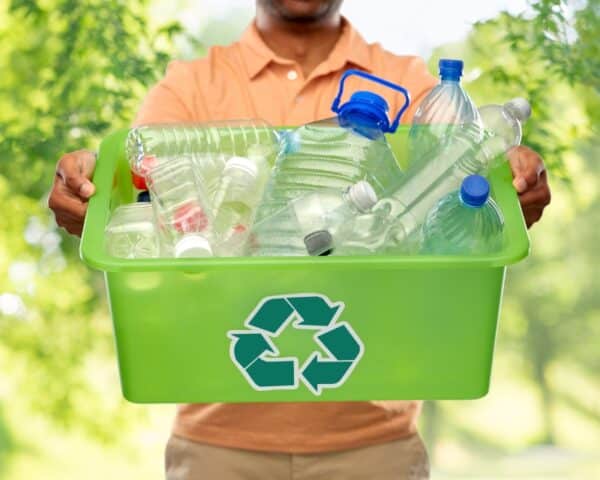
Packaging Guidelines Under SB 343
Where to Start
To identify if chasing arrows or recyclability claims can be used under criteria requirements 1 and 2, reference CalRecycle’s SB 343 Material Characterization Study Final Findings – 2023/2024 (DRRR-2025-1750).
Approved plastic packaging materials for criteria requirements one and two include:
- Clear and pigmented PET bottles, jugs and jars
- Clear, natural and pigmented HDPE and LDPE bottles, jugs, jars, tubs, pails and other single-use rigid containers
- Clear, natural and pigmented PP bottles, jars, tubs, and other single-use rigid containers
For the most recent updates and program news, please refer to CalRecycle’s website. You can also subscribe to CalRecycle’s Material Characterization Study Listserv to stay informed about study progress.
Complete Your Recyclability Assessment
Determining if your packaging appears on CalRecycle’s approved list is just the beginning. You must also verify if your packaging meets criteria 3 and 4. Ensure your package design aligns with the APR Design® Guide and that it doesn’t contain prohibited substances.
Fast Facts You Need to Know
- Documentation is Required: There must be a written record of how your packaging meets the criteria requirements. This documentation must be furnished to the public on request.
- The Law Doesn’t Ban Non-Recyclable Products: This law does not prevent non-recyclable packaging, but it does ban the sale of a package or product that makes a false or misleading recyclability claim.
- Using the Resin Identification Code (RIC): California maintains a separate requirement that single-serve rigid plastic packaging ranging from eight ounces to five gallons must display the RIC symbol. When packaging fails to meet the recyclability criteria, the resin identification number must appear within a solid-line equilateral triangle rather than the chasing arrows design. For packaging that does meet all recyclability criteria, companies may continue using the chasing arrows symbol around the RIC.
- CalRecycle Won’t Make Individual Determinations: The state agency operates with restricted enforcement powers under SB 343 and has clarified that it will not evaluate whether specific individual products or packages meet recyclability standards.
- High Recycling Rate Exception: Any product with a demonstrated recycling rate of 75% or higher is considered compliant with the law.
- Beverage Container Exception: Beverage containers under the California CRV (California Redemption Value) program are exempt.
- Conflicts with Other States: The resin identification code with the chasing arrows is currently required on certain plastic packaging in over 35 states. This means companies may face conflicting obligations when complying with California’s requirements and other state laws. Consult legal guidance for the best path forward.
- Enforcement: According to Public Resources Code section 42358, the state of California, a city or a county can impose monetary civil penalties for violations.
Need More Guidance?
For additional questions or detailed information, see CalRecycle’s FAQ, which addresses common concerns about SB 343 implementation.
Moving Forward with Confidence
Understanding and complying with California SB 343 is essential for any company that sells, distributes or imports plastic packaging into California. The law represents a significant shift toward more accurate and transparent recycling labeling, helping consumers make informed decisions while reducing contamination in recycling streams.
MJS Packaging works with a global network of manufacturing partners who understand recycling and labeling laws. Contact us with any questions about how MJS Packaging can support your packaging needs.
This article provides general information about California SB 343 and is not intended as legal advice. Companies should consult with legal counsel to ensure compliance with all applicable laws and regulations.